
Water Based Paper Coating for Sustainable and Food Grade Packaging Solutions

Packaging is under pressure from two sides. Brands want paper packs that can resist oil, moisture, and heat. Regulators and buyers want lower plastic use, safer food contact materials, and clearer end-of-life choices. That is why paper converters in India, Saudi Arabia, and other fast-growing markets are paying close attention to coating chemistry.
A well-designed Water Based Paper Coating can help paper perform more like a barrier material without relying on heavy plastic lamination. It can improve grease resistance, moisture hold-out, printability, heat seal strength, and surface feel, depending on the formulation and application method.
For food service, bakery, dry foods, frozen foods, and quick-commerce packaging, the value is practical. The coating must run on existing machines, meet food contact expectations, support recyclability goals, and deliver consistent performance in hot, humid, and high-volume supply chains.
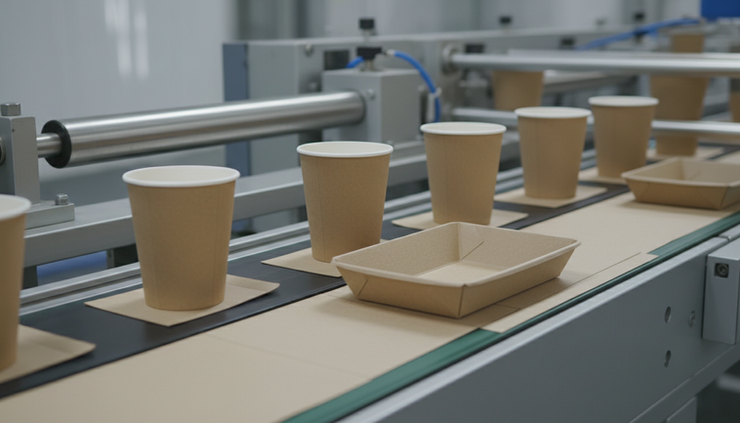
Why paper packaging needs better barrier coatings
Plain paper is strong, printable, and renewable, but it is naturally porous. It absorbs water and oil because its fibre network has microscopic pathways. For many items, such as copier paper or cartons for dry goods, that is not a problem. For food packaging, it becomes a performance risk.
Common challenges include:
Hot oil soaking into takeaway wrappers
Condensation weakening chilled food cartons
Sauces staining paper bowls
Ice cream or frozen food packs losing stiffness
Ink or odour migration concerns in poorly designed structures
Plastic films have often been used to solve these issues. They give strong moisture and grease barriers, but they can make recycling harder when bonded tightly to paper. Many waste paper mills prefer fibre-based packaging that repulps cleanly and does not leave heavy plastic rejects.
This is where water-based coating systems are becoming relevant. They are applied as liquid dispersions or emulsions, then dried to form a thin functional layer on paper or paperboard. The coating can be adjusted for the end use, such as grease resistance for burger wraps or moisture hold-out for chilled food cartons.
How water-based coatings work on paper
Water-based coatings use water as the main carrier. As the coating dries, the functional ingredients form a continuous layer on the paper surface. The final film can change how the paper interacts with oil, water vapour, liquid water, heat, and sealing jaws.
A typical system may include:
Barrier polymers that reduce oil or water penetration
Waxes or bio-based components for surface repellency
Mineral fillers for smoothness and cost balance
Binders that help the coating attach to paper fibres
Additives for slip, anti-blocking, foam control, or rheology
The coating is usually applied by rod coating, blade coating, air knife coating, gravure, flexo, or size press systems. The right method depends on coat weight, viscosity, paper grade, production speed, and target barrier.
A lower coat weight may be enough for dry snacks. A higher or multi-layer coating may be needed for oily or wet foods. The goal is not to add “more coating” by default. The goal is to apply the right barrier at the lowest practical coat weight while keeping the pack recyclable, printable, and economical.
The sustainability case is stronger when performance is measured
A coating should not be called sustainable only because it is water-based. The full structure matters. Fibre source, coat weight, repulpability, drying energy, waste generation, and transport efficiency all affect the environmental profile.
That said, Sustainable paper coating can support real packaging improvements when it helps replace difficult-to-recycle laminates, reduces plastic content, and allows paper fibres to be recovered after use. In India, where paper recycling networks are active but quality varies by region, repulpability and sorting behaviour are important. In Saudi Arabia, where the food service and retail packaging sectors continue to expand, waste reduction and practical recovery systems are becoming stronger purchase factors.
A converter should ask clear questions before selecting a coating:
Does the coated paper repulp under standard mill conditions?
Does it create sticky residues or screen rejects?
Can the coating achieve the barrier at a low coat weight?
Does the coating need high drying energy?
Can the finished pack be printed and converted without cracking?
Does the supplier provide test data, not just claims?
A good coating is not judged only in the lab. It must survive converting, filling, transport, storage, and real consumer use.
For external reading, packaging teams can refer to official resources from the Bureau of Indian Standards and the Food Safety and Standards Authority of India when building compliance checklists for food contact packaging.

Food grade performance needs safety and function
Food packaging must do more than look clean. It must be safe for intended food contact and suitable for the food type. A Food grade paper coating should be designed for the expected conditions, such as dry contact, fatty food contact, hot filling, chilled storage, or microwave reheating where applicable.
Food contact suitability may involve checking:
Raw material declarations
Overall migration and specific migration, where required
Odour and taint behaviour
Heavy metal limits
Heat resistance during sealing or filling
Grease resistance for fatty foods
Water resistance for chilled or wet foods
The test plan should match the application. A paper wrap for dry bakery items does not need the same barrier profile as a bowl for hot curry or a dessert cup stored in cold conditions. In Indian food service, packaging often faces oil, steam, spice, and heat at the same time. In Saudi Arabia, packs may face high ambient temperature during storage and distribution. These conditions make application-specific testing essential.
For internal linking, useful anchor text can include food packaging coating solutions, paper barrier coating for converters, and sustainable packaging materials for food service. These links can guide readers to service pages, technical pages, or product selection guides without forcing keywords into every paragraph.
Common applications in India and Saudi Arabia
Water-based barrier coatings are used across several fibre-based packaging formats. The strongest opportunities are where brands want paper feel, food safety, and reduced plastic content.
Quick service and takeaway packaging
Burger wraps, sandwich wraps, paper bowls, and clamshells need resistance to grease, steam, and short-term moisture. Coating selection must consider fold cracking and hot food contact. A coating that performs on a flat sheet may fail at creases if it lacks flexibility.
Bakery and confectionery packaging
Bakery boxes, liners, and trays often need oil resistance rather than full water barrier. For cakes, pastries, and chocolate-based products, odour neutrality is important because paper can absorb and transfer smells.
Dry food and grocery packs
Tea, sugar, flour mixes, snacks, and dry ready-to-cook foods may need moderate moisture protection and good heat seal behaviour. These packs also need strong print quality, especially for regional language labels and export requirements.
Frozen and chilled food packs
Frozen foods need paperboard that can resist condensation, cold-chain handling, and surface weakening. Coating adhesion and crack resistance become critical because freezing and thawing stress the fibre surface.
Cups and liquid packaging components
Cups, lids, and similar structures require strict control of liquid hold-out and sealing. Not every water-based system suits hot liquids or long contact times. Testing should include the actual fill temperature and holding time.

How to choose the right coating system
The best coating choice starts with the end use, not the chemistry brochure. A converter should define the pack’s working conditions before asking for samples.
Use this practical selection flow:
Requirement | What to check | Why it matters |
Food type | Dry, moist, oily, acidic, or frozen | Each food stresses the coating differently |
Contact time | Short service, shelf storage, or long hold | Longer contact needs stronger resistance |
Temperature | Hot filling, chilled chain, room storage | Heat and cold affect film strength |
Converting method | Folding, punching, sealing, or forming | Coating can crack during mechanical stress |
Print process | Flexo, offset, gravure, or digital | Surface energy affects ink adhesion |
End of life | Repulping, recycling, composting where valid | Claims must match local waste systems |
A technical trial should include both lab results and machine feedback. Lab sheets can pass grease tests, but production rolls may show blocking, curl, dusting, poor drying, or seal variation. That is why pilot coating and converting trials are valuable before full commercial changeover.
Key tests may include:
Cobb value for water absorption
Kit test or similar methods for grease resistance
Heat seal strength where sealing is required
Blocking resistance under pressure and temperature
Surface energy for print and glue performance
Repulpability checks for recycling behaviour
Sensory checks for odour and taste transfer
Testing standards can differ by market and buyer requirement. Export packaging may need a wider compliance review, especially when food contact rules from multiple regions apply.
Mistakes that increase cost or failure risk
Many packaging failures come from treating coating as a one-step fix. In practice, coating performance depends on paper quality, drying, storage, converting, and the pack design.
Avoid these common mistakes:
Choosing barrier without checking base paper
A porous, weak, or dusty base paper can absorb too much coating and reduce surface barrier. Base paper formation, sizing, smoothness, and moisture content all affect the final result.
Ignoring crease and fold areas
Barrier often fails at folds. For bowls, trays, and cartons, crease testing should be part of approval.
Overcoating to hide process problems
Higher coat weight may improve barrier, but it can raise cost, slow drying, affect recyclability, and create blocking. Better process control may solve the issue at lower coat weight.
Skipping real food trials
Water, oil, and lab simulants are useful, but the final product should be tested with real food or a close match. Spices, sauces, salts, and fats can behave differently.
Making broad sustainability claims
Terms like recyclable, biodegradable, and compostable need evidence. Local infrastructure also matters. A claim that works in one country may not work in another.

What the future of coated paper packaging looks like
The next stage of paper coating will focus on balanced performance. Buyers will not accept weak packs just because they look eco-friendly. At the same time, they will question packaging that uses excessive plastic or cannot be recovered easily.
The strongest developments are likely to come from:
Lower coat weight barrier systems
Better repulpable coatings
Bio-based ingredients where performance allows
Improved heat seal coatings for paper packs
Coatings that work with recycled fibre board
Region-specific testing for heat, humidity, and food habits
For India, the growth of food delivery, organised retail, and packaged foods will keep demand strong. For Saudi Arabia, expansion in food service, hospitality, and modern retail will support higher interest in safe, premium paper packaging. In both markets, manufacturers that can prove performance with data will earn more trust than those relying only on sustainability language.
To discuss coating solutions for paper packaging, visit Omnia Papers LLP for sustainable and food grade paper coating support.
Frequently asked questions
Is water-based paper coating fully plastic-free?
Not always. Some water-based coatings use polymer dispersions carried in water. They may reduce plastic film use, but the exact composition depends on the formulation. Ask for technical details and end-of-life test data.
Can coated paper be recycled?
Many coated papers can be designed for repulpability, but results depend on coating type, coat weight, paper grade, and local recycling systems. A repulpability test gives better evidence than a general claim.
Is water-based coating safe for direct food contact?
It can be suitable when the formulation is designed for food contact and tested for the intended use. Food type, temperature, and contact time should be part of the approval process.
What is the difference between grease resistance and water resistance?
Grease resistance slows oil and fat penetration. Water resistance reduces liquid water absorption. A coating may perform well in one area and only moderately in the other.
Can water-based coatings replace plastic lamination in all packs?
No. Some high-barrier applications still need more complex structures. Water-based systems work best when the barrier requirement matches the coating’s proven performance.
Final takeaway
Water-based coatings are not a universal answer, but they are one of the most practical routes to better paper packaging. The right system can reduce dependence on plastic lamination, support food safety goals, and give paper the barrier properties needed for real-world use.
The best results come from a disciplined process: define the food contact conditions, choose the right base paper, test the coating under production conditions, and verify claims with reliable data. That approach gives converters and food brands a stronger path towards packaging that performs well and fits modern sustainability expectations.


Comments